History of Gouda
Gouda has been made since the 12th century in the Netherlands – the cheese is named after a city in Noord-Holland, even though the cheese was not believed to have originated here. The city of Gouda was one of the only places in the country where cheese producers and merchants could exchange goods during the Middle Ages and Renaissance. Gouda held a monopoly on the cheese market in the Netherlands during this time and continues to be the most common Dutch cheese today.
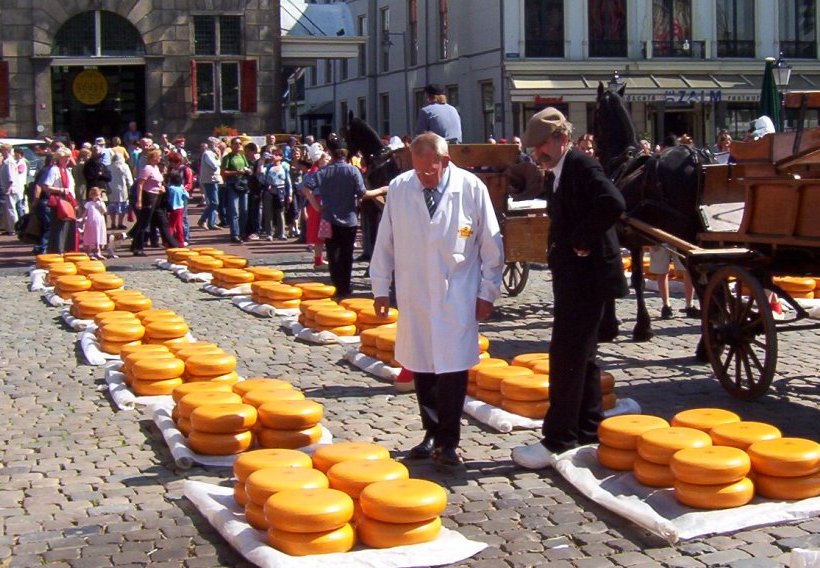
Gouda has become a staple internationally and is one of the most popular cheeses in the world – it accounts for 50-60% of the world’s cheese consumption! There are 7 different types of Gouda categorized based on age. The waxed rind of Gouda also changes with age – young cheeses have yellow, orange and red waxes while aged cheeses have black rinds. In America, the Gouda tends to be smoother and less rich in flavor.
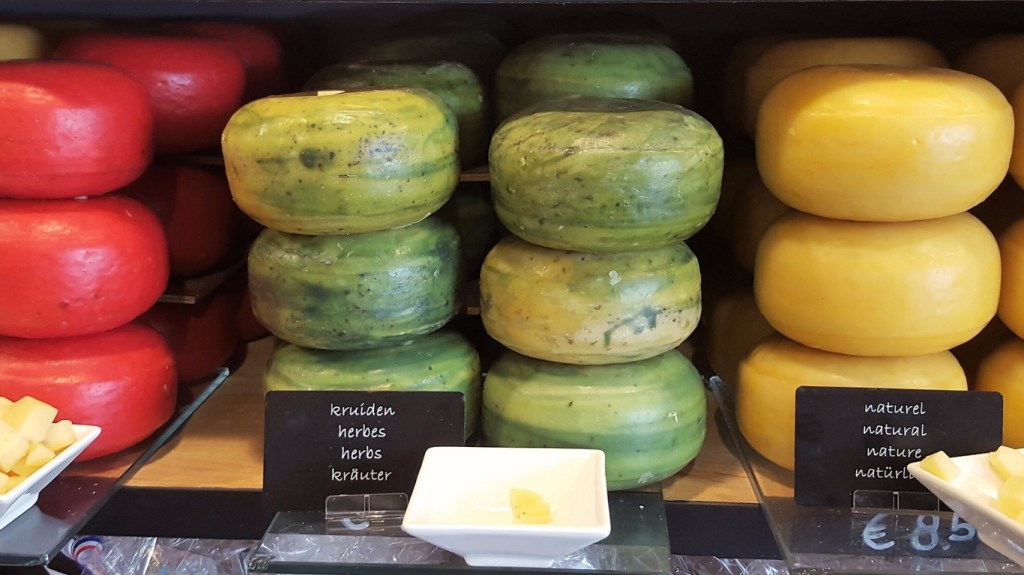
Gouda is traditionally made from unpasteurized cow’s milk and coated in a yellow wax that prevents it from drying it out during its maturation. Now that Gouda is mass produced, pasteurized milk is typically used because unpasteurized milk spoils quicker and is thus less profitable for producers. Even so, over 300 farms in the Netherlands still make Gouda the old-fashioned way. This cheese is called Boerenkaas (farmer’s cheese) and is prepared according to historical standards.
Fun Fact: Gouda is available in large wheels, weighing 10-25 pounds!
How to Make Gouda
Gouda cheese is 32% fat content including moisture, calcium, and vitamins A, B, D, and K2.
To make Gouda cheese, you need milk, starter culture and rennet. First, milk is heated in a tub and the starter culture and rennet are added. The rennet creates the hard substance and the culture adds to the flavor – both combine to form the curd. Gouda typically has a nutty and sweet flavor with a dense texture. The curd is cut and stirred to create the right texture. Next, the remaining moisture (whey) is removed and the substance is placed in a mold to form the right shape. To add more flavor to the cheese, it is soaked in a brine bath and aged until the taste has been perfected. Gouda can take anywhere from 4 weeks to 12 months to mature!

Highlights from my Gouda Tasting
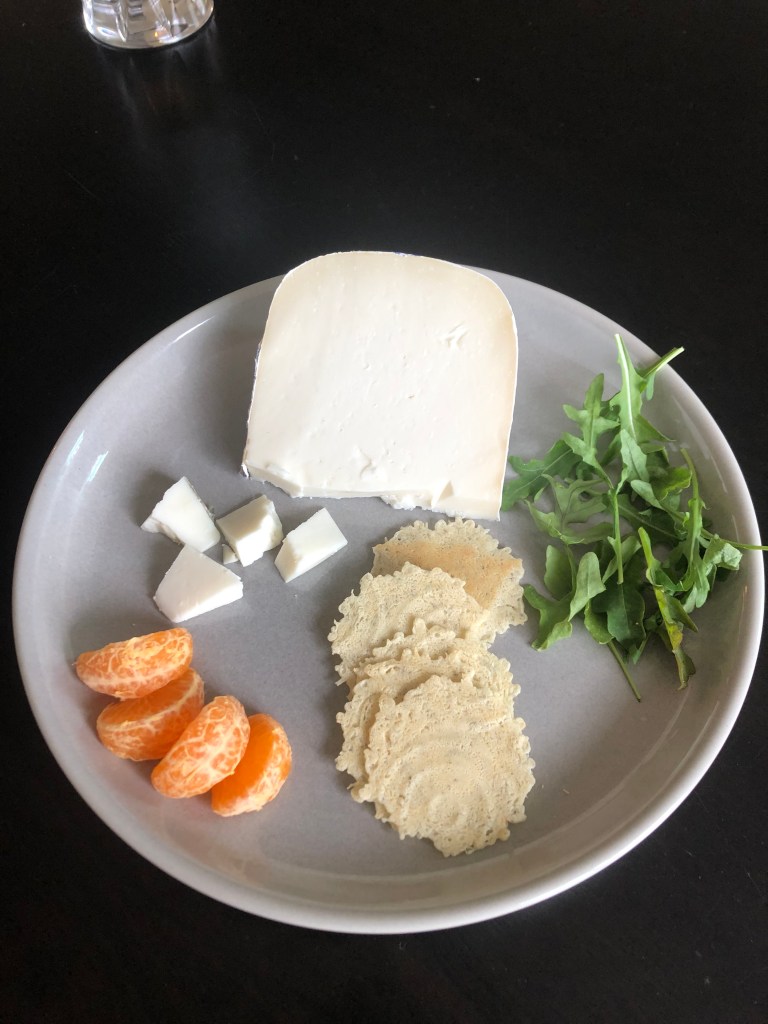
For my cheese tasting, I used goat’s milk gouda (although this cheese is traditionally made with cow’s milk).
When participants were asked what they liked/disliked about the cheese, they responded:
- Its creaminess. I have no dislikes.
- I like the color and weight of the cheese. I dislike the texture because it seems like clay.
- Like: texture, salty taste, smooth. Dislike: nothing
When participants were asked to describe how the cheese feels in their mouths, they responded:
- soft, lovely, creamy, melts in my mouth
- clay, hard, dry
- smooth, buttery without feeling oily
When participants were asked to rate the texture of the cheese from 0-10 (dislike-like), the average rating was 7.3
To see the rest of my results from this tasting, click the link here!
 Exploring Cheese Textures
I hardly ever eat Gouda but I think I should start! 🧀
LikeLike