Parmesan cheese was first made by monks in the region of Parma-Reggio during the Middle Ages. The cheese was known as caseum paramensis in Latin, but it was shortened to Pramsàn by the locals. The cheese became so popular that, by the Renaissance era, nobility were making the cheese to serve at their dinner parties. The cheese later spread throughout Italy, and even across national borders to France, where Italian visitors would bring the cheese as a gift. In 1954, the cheese was officially named Parmigiano-Reggiano by an alliance of Italian cheesemakers. Today, the cheese is enjoyed internationally!
Fun Fact: The first record of Parmesan was in 1254 when a noble woman from Genoa traded her house for an annual supply of 53 pounds of cheese made in Parma.

- Collect rich milk from cows
- Heat and acidify the milk
- Add the rennet, which coagulates the milk and forms curds
- Break up the curds into small pieces (the size of a grain of wheat)
- Cooking and “knitting” – the curds are heated to 131 degrees Fahrenheit and then the heat is turned off and, for about an hour, the curds sink to the bottom of the cauldron. They then knit together to form a “spongy mass.”
- The curd mass is divided in half using a long, wooden paddle and each mass is wrapped in muslin.
- The cheeses are hung on poles to shed excess liquid.
- The cheeses are transferred to molds to get a circular shape. They are turned multiple times and weighted gently to get out excess liquid.
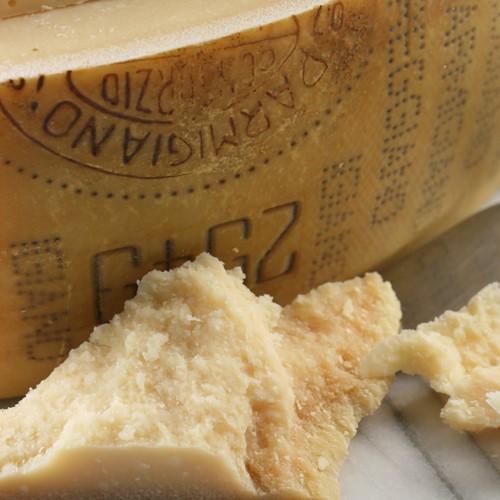
- The words Parmigiano Reggiano are imprinted with pin dots on the wheel of the cheese – a sign of its authenticity!
- The cheese is brined in a sea-salt solution for 24 hours.
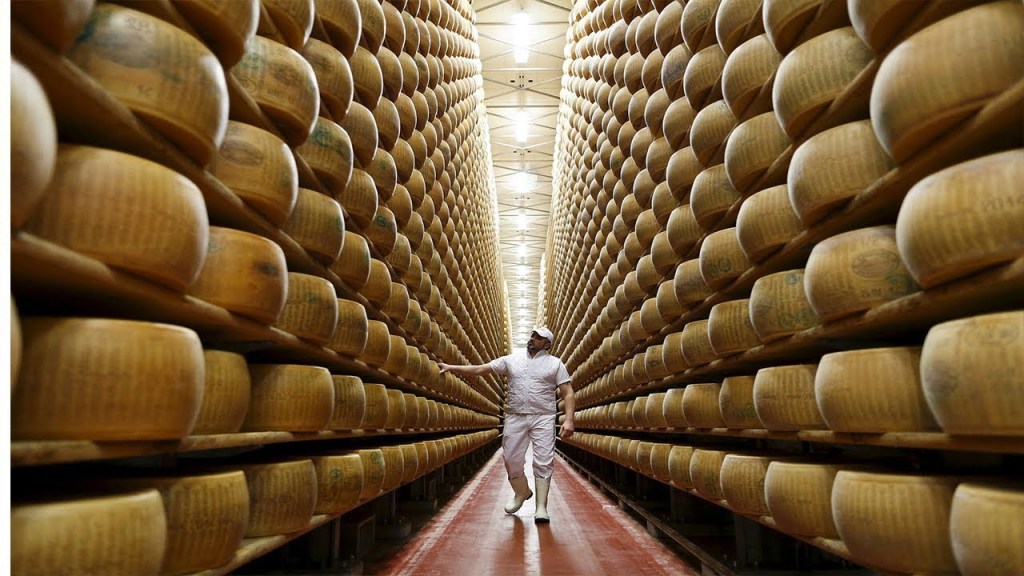
- The wheels are transferred to curing rooms where they age for one year.
Highlights from My Parmesan Tasting
When participants were asked what they specifically liked/disliked about the cheese, they responded:
- I like cheese in general, so I like it. I dislike the hardness; it doesn’t melt or dissolve in your mouth
- like: it wasn’t gross. dislike: texture, no taste.
- consistency is good, but I disliked how hard and dense it was
When participants were asked to describe how the cheese feels in their mouths, they responded:
- It feels stiff, hard, with shavings coming off when I chew
- crumbly, hard, stiff, crunch
- the cheese felt dry, hard and a mixture of clay and wax
When asked to rate the texture of the cheese on a scale of 1-10(dislike-like), the average rating was 2.5
To see the rest of the results from my tasting, click the link here!
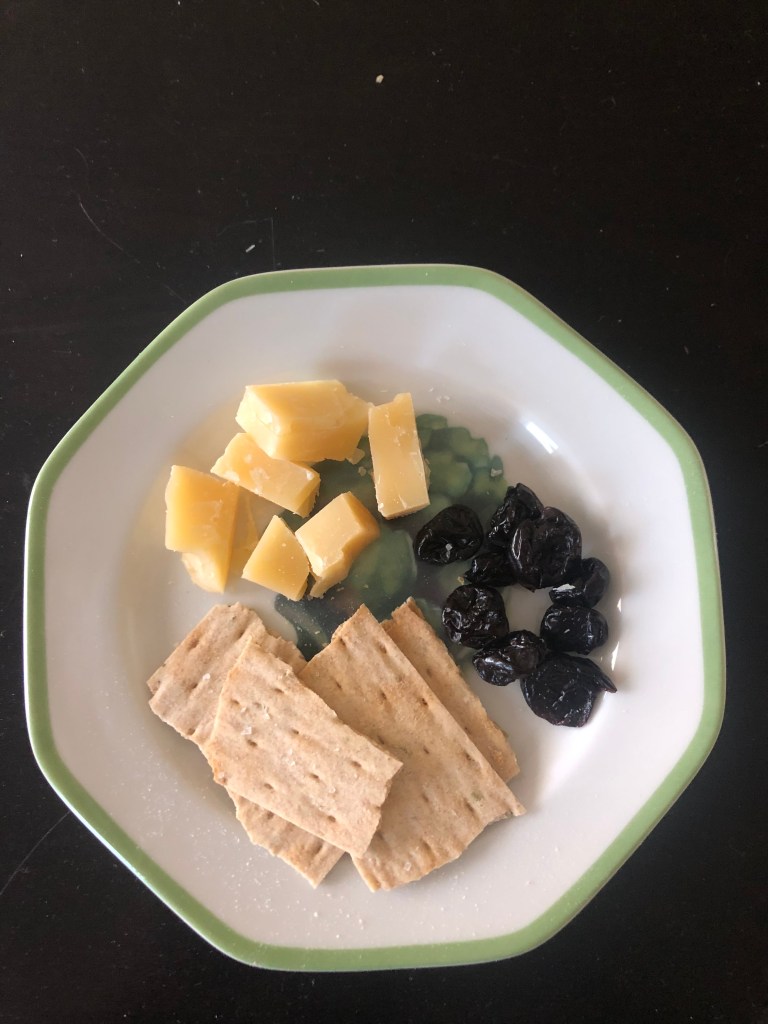
 Exploring Cheese Textures